Trading around a day job: one window, one routine
You don’t need to watch every session. Pick one window, run a 20-minute routine, and follow three rules built for part-time traders.
Most traders reading this have a job. You can’t sit at the screen from the London open to the New York close, and you don’t need to. Part-time traders who do well pick one window, prepare for it properly, and ignore the rest of the day. The ones who struggle try to trade like full-timers in stolen minutes, and it shows in their results.
The short version
- Pick one trading window that lines up with your free time and a liquid session.
- Run a 20-minute routine before it: calendar, levels, written plan.
- Either watch the window with full attention or place pending orders from the plan and walk away.
- Fewer trades, higher standards. Two good setups a week is a solid part-time result.
Pick one window
Your window has to overlap with real volume. Trading gold at a quiet hour because it’s the only time you’re free just means paying spread for no movement. Check the market sessions clock, which converts every session to your own time zone, and see which one lines up with your day.
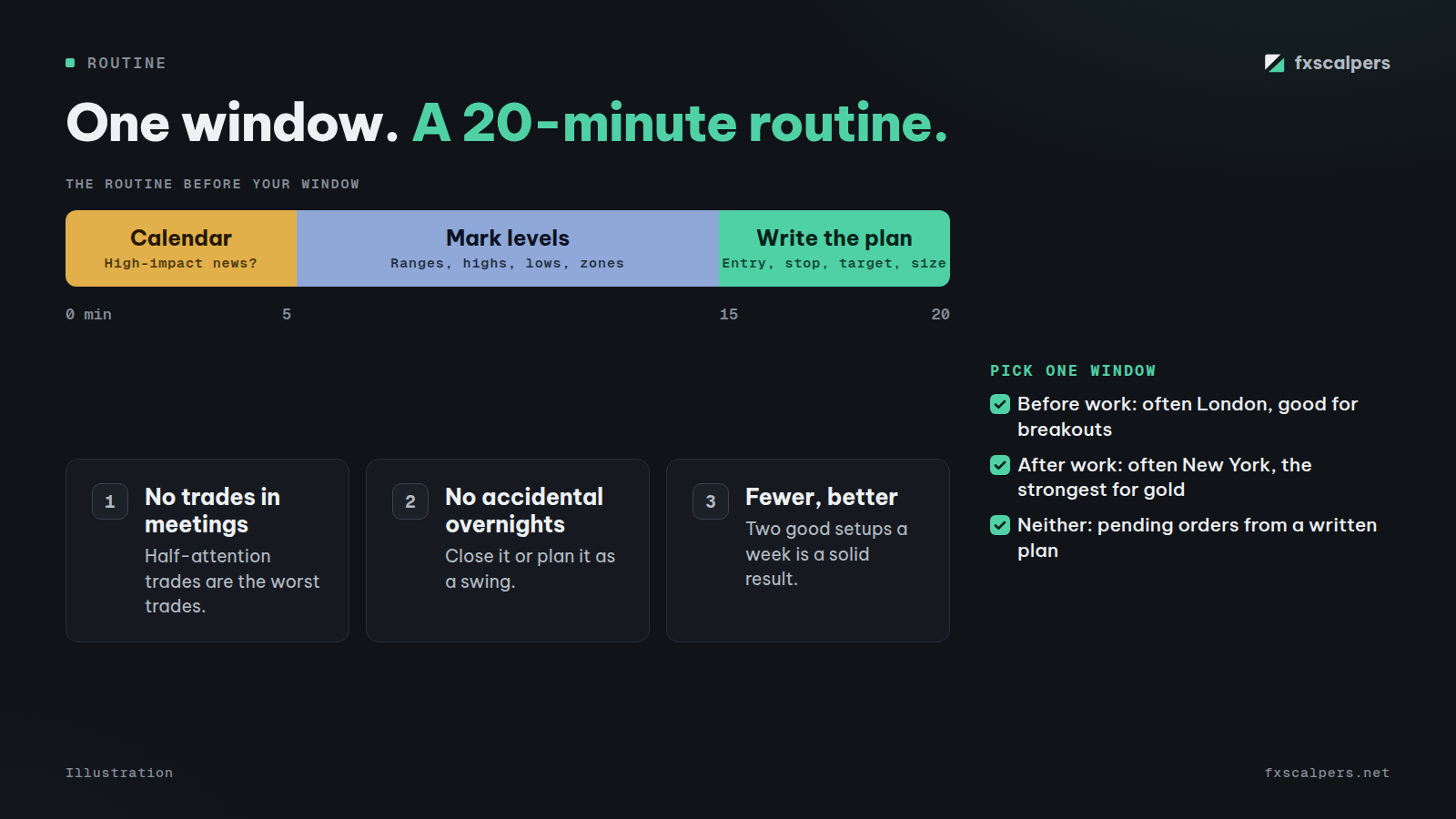
- Before work: depending on your time zone, this may line up with the London open. Good for breakout setups like the London Breakout on EUR/USD.
- After work: may line up with the New York session, the strongest window of the day for gold. See scalping gold at the New York open.
- Neither fits: use pending orders placed from a plan, with stop and target set in advance, instead of watching live.
Commit to that window for at least a month. Switching windows every week means you never learn how your market behaves at that hour.
A 20-minute routine
- 5 minutes: the calendar. Check for high-impact news in your window. If CPI, NFP or the Fed lands inside it, the first minutes are a news trade, not a technical one. Decide now whether you trade it or skip the day. How to read the calendar.
- 10 minutes: mark the levels. The Asian range, the previous day’s high and low, and the zones from the weekly plan. These are where liquidity sits and where your setups will form.
- 5 minutes: write the plan. For each setup you’d take: entry zone, stop, target, lot size. Written down, not in your head.
Then do one of two things: watch the window with full attention, or place the pending orders and walk away. Nothing in between.
Pending orders done right
If you can’t watch, pending orders are your best friend, as long as they come from the plan and not from hope.
- Entry: a limit order at the zone, not in the middle of nowhere.
- Stop and target attached: never place an entry order without both. You won’t be there to add them.
- An expiry: if the setup is for the London session, the order expires at the end of it. A stale order that fills six hours later is a different trade in a different market.
- Stop level check: brokers enforce a minimum distance for pending orders; a rejected order is a missed trade you won’t notice until lunch.
Rules for part-timers
- Never trade from your phone during meetings. Half-attention trades are the worst trades. If you can’t give the chart full attention, the plan is pending orders or nothing.
- No holding intraday trades overnight because you ran out of time. Close them or plan them as swings from the start, with a stop sized for overnight moves and swap included. Swap on gold adds up faster than most expect.
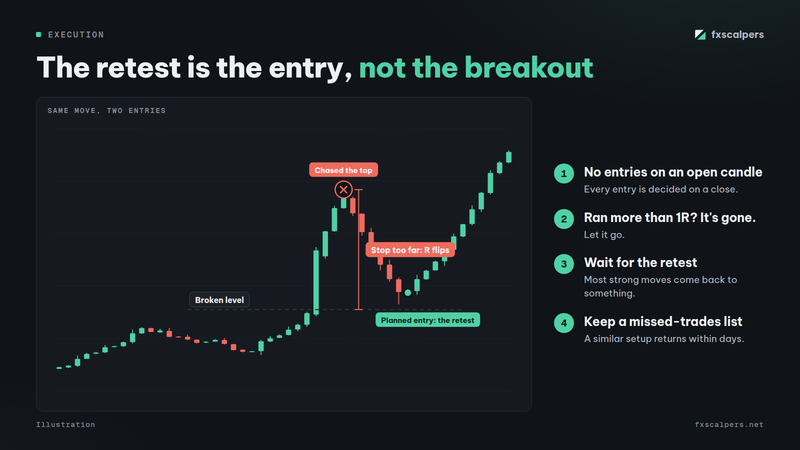
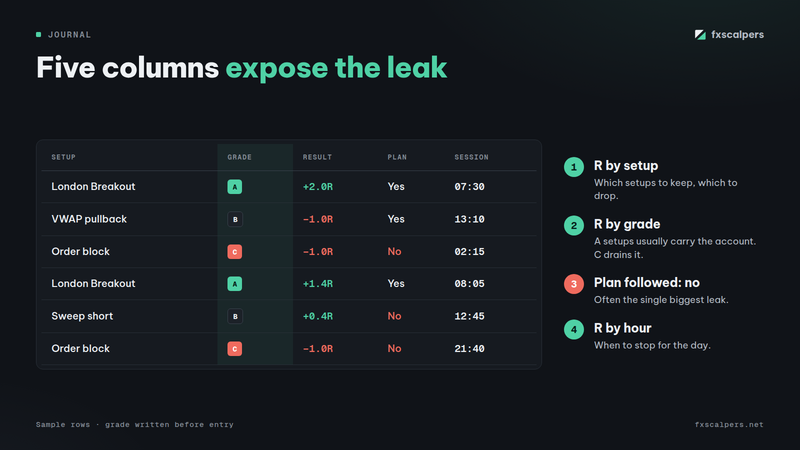
- Fewer trades, higher standards. Only A-grade setups. Two good setups a week is a solid part-time result and keeps the sample clean enough to learn from.
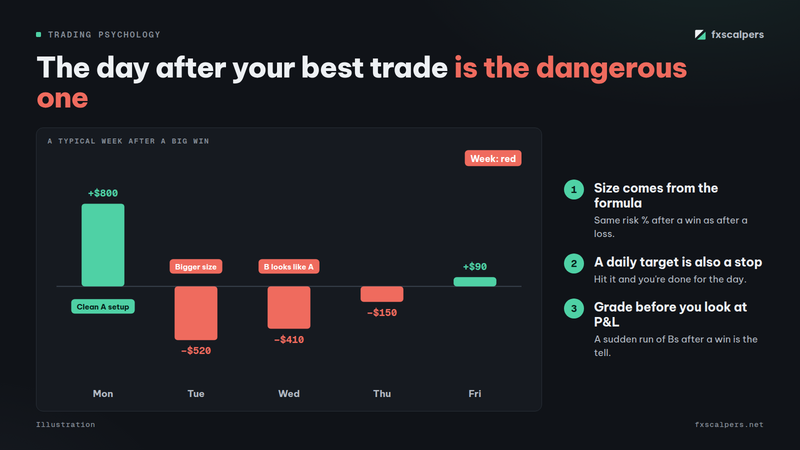
- A daily loss limit is non-negotiable. With a job, you can’t afford a trading day that ruins your evening and your focus the next morning.
A week that works
Sunday evening: read the weekly Market Structure plan and mark the zones on your charts. Monday to Friday: the 20-minute routine before your window, one or two setups at most. Saturday: 15 minutes with the trading journal. That’s under three hours a week of structured work, and it beats ten hours of scattered screen-watching.
Traps to avoid
- Checking P&L at your desk every ten minutes. It wrecks both your job and your trading. Set price alerts and close the app.
- “Catching up” on weekends. Forex is closed; crypto and weekend CFDs have different behavior and wider spreads. Your edge lives in your weekday window.
- Revenge trades after work. A loss in the morning window doesn’t justify an unplanned trade in the evening. Different window, different plan, or no trade.
Quick FAQ
Can I really be consistent with two trades a week?
Yes. Consistency comes from rules and sample size over months, not trade count per day.
What if my only free window is in the Asian session?
Trade pairs that move in Asia, such as USD/JPY, or use pending orders for London placed from a written plan.
The weekly Market Structure plan in the Free channel is built for exactly this: it tells you where to wait before the week starts, so even a 20-minute window has a plan behind it. Join, read it on Sunday, and let the setups come to your window.