Why gold spikes on CPI (and why the first move sometimes reverses)
From inflation data to rate expectations to the dollar: the chain behind the CPI spike, and how to trade CPI day safely.
US CPI day can move gold more in five minutes than in the rest of the week. It isn’t random. It follows a chain from inflation data to interest rate expectations to the dollar, and understanding that chain tells you why the spike happens, which way it’s likely to go, and why it sometimes reverses before you’ve finished reading the headline.
The short version
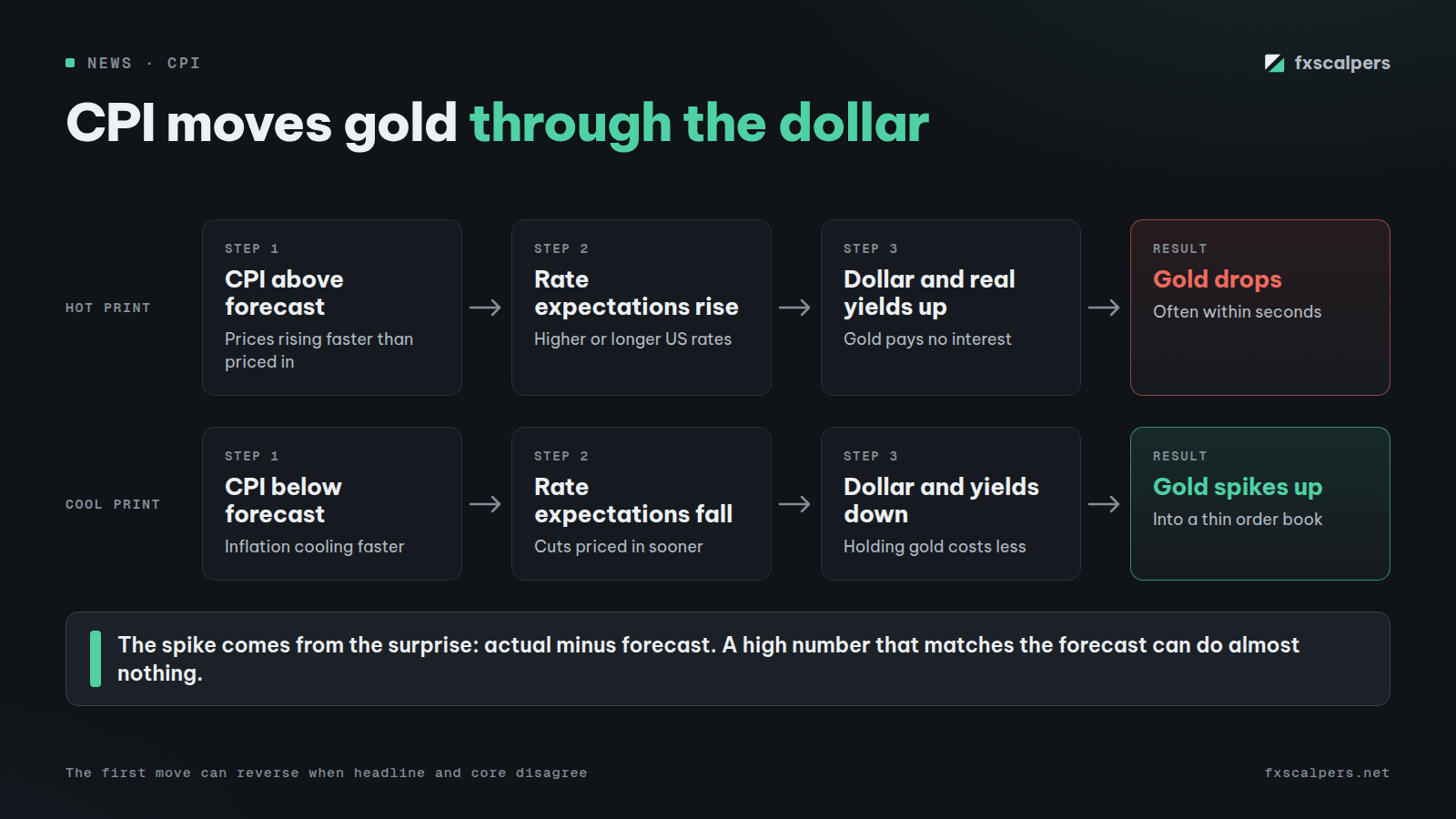
- Hot CPI → higher rate expectations → stronger dollar and real yields → gold falls. Cool CPI does the opposite.
- The move comes from the surprise (actual minus forecast), not from the number itself.
- The first move can reverse when headline and core disagree, or when liquidity returns and part of the spike fills back.
- On CPI day: no new trades 15 minutes before, wait out the first minutes, size for slippage.
The chain in plain English
- CPI measures inflation. It’s the monthly change in consumer prices in the US. Hotter than expected means prices are rising faster than the market thought.
- Hot inflation raises rate expectations. Traders price in higher interest rates, or rates staying high for longer, from the Federal Reserve.
- Higher rate expectations lift the dollar and real yields. Real yields are bond yields after inflation. When they rise, holding cash and bonds pays more.
- Gold pays no interest. When the alternatives pay more, holding gold becomes relatively less attractive, and gold is priced in dollars, so a stronger dollar pushes it down too.
- Gold drops.
A cooler than expected print runs the chain in reverse: rate cuts get priced sooner, the dollar and yields fall, and gold spikes up.
It’s the surprise that moves price
Before the release, every economist’s forecast is published and the market has already positioned for the consensus. A high CPI that matches expectations can do almost nothing, because it was already in the price. The spike comes from the gap between actual and forecast.
And the gap doesn’t have to be big. A 0.1 percentage point miss on a closely watched monthly number can move gold hard, because everyone repositions at once into an order book that just thinned out. Reading the economic calendar covers the forecast, previous and actual columns in detail.
Headline vs core
CPI comes as two main numbers released at the same moment:
- Headline CPI: everything, including food and energy.
- Core CPI: excluding food and energy, which swing a lot. The Fed and the market usually care more about core.
When both surprise in the same direction, the move tends to be clean. When they disagree, say headline hot because of an oil spike but core cool, the first algorithmic reaction can go one way and the market can settle on the other a minute later. That’s one of the classic reversal patterns.
Why the first move sometimes reverses
- Headline and core point in different directions, and the market settles on core after the first seconds.
- Liquidity returns after the spike. Market makers pull quotes into the release, price jumps across empty levels, and when quotes come back part of the move gets filled back. That’s the logic behind fading the news spike.
- Positioned traders cover. Traders who were positioned for the opposite number close out, adding fuel in both directions.
- The bigger picture disagrees. If the higher-timeframe trend is strongly one way, a surprise against it often gets faded within the session.
What it looks like on the chart
Gold drifts quietly in the 30 minutes before 12:30 UTC (13:30 in winter). Spreads start to widen a minute or two before the release. At the release, one or two M1 candles cover what normally takes an hour. Then comes either continuation, as the market reprices over the next hour, or a snap-back toward the pre-release price. Often both: a partial snap-back, then continuation in the original direction.
How to trade CPI day
- Know the time and the forecast. Write both down before the session.
- No new trades 15 minutes before the release. Spreads widen and fills get worse even before the number.
- Decide in advance what happens to open trades: close them, or keep them with a stop you accept being slipped. Moving the stop to breakeven into CPI often just guarantees a bad fill.
- Wait out the first minutes. Unless you trade a dedicated news setup, let spreads come back to normal before doing anything.
- Size for slippage. A $5 stop can fill $2 worse. Size as if the stop were wider. The lot size calculator helps.
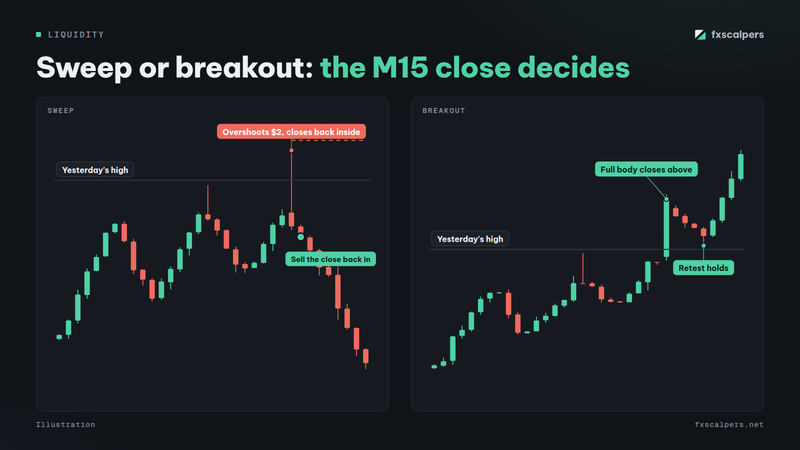
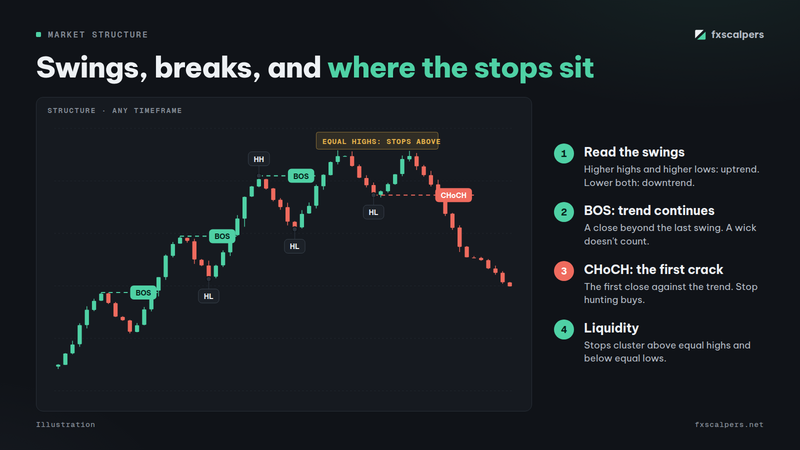
- Trade the reaction, not the number. After the dust settles, the usual structure rules apply again: sweeps, breaks, retests.
Quick FAQ
Is NFP the same?
Similar chain, different data: jobs instead of prices. Strong jobs and wages raise rate expectations and weigh on gold; weak ones help it. NFP also comes with revisions and the unemployment rate, which can disagree with the headline.
Does the Fed decision work the same way?
The rate decision itself is usually expected. The move comes from the statement, the projections and the press conference tone, which is why FOMC moves often reverse or extend 30 minutes after the release.
Should beginners trade CPI?
Watching CPI is one of the best lessons in trading. Trading it with real money comes later, with a written plan and small size.
Traps to avoid
- Guessing the number and positioning before it. That’s a coin flip with a wide spread attached.
- Market orders into the spike. The worst fill of the week.
- Assuming hot CPI always means gold down. Usually, not always: context and core decide.
The Free channel sends high-impact news alerts before CPI, NFP and the Fed: the exact time, what spreads usually do, and what to do with open trades. Join and never get surprised by the calendar again.